By Lee · July 31, 2026
Small Activities, Big Growth: Why Connect-the-Dots and Colouring Matter
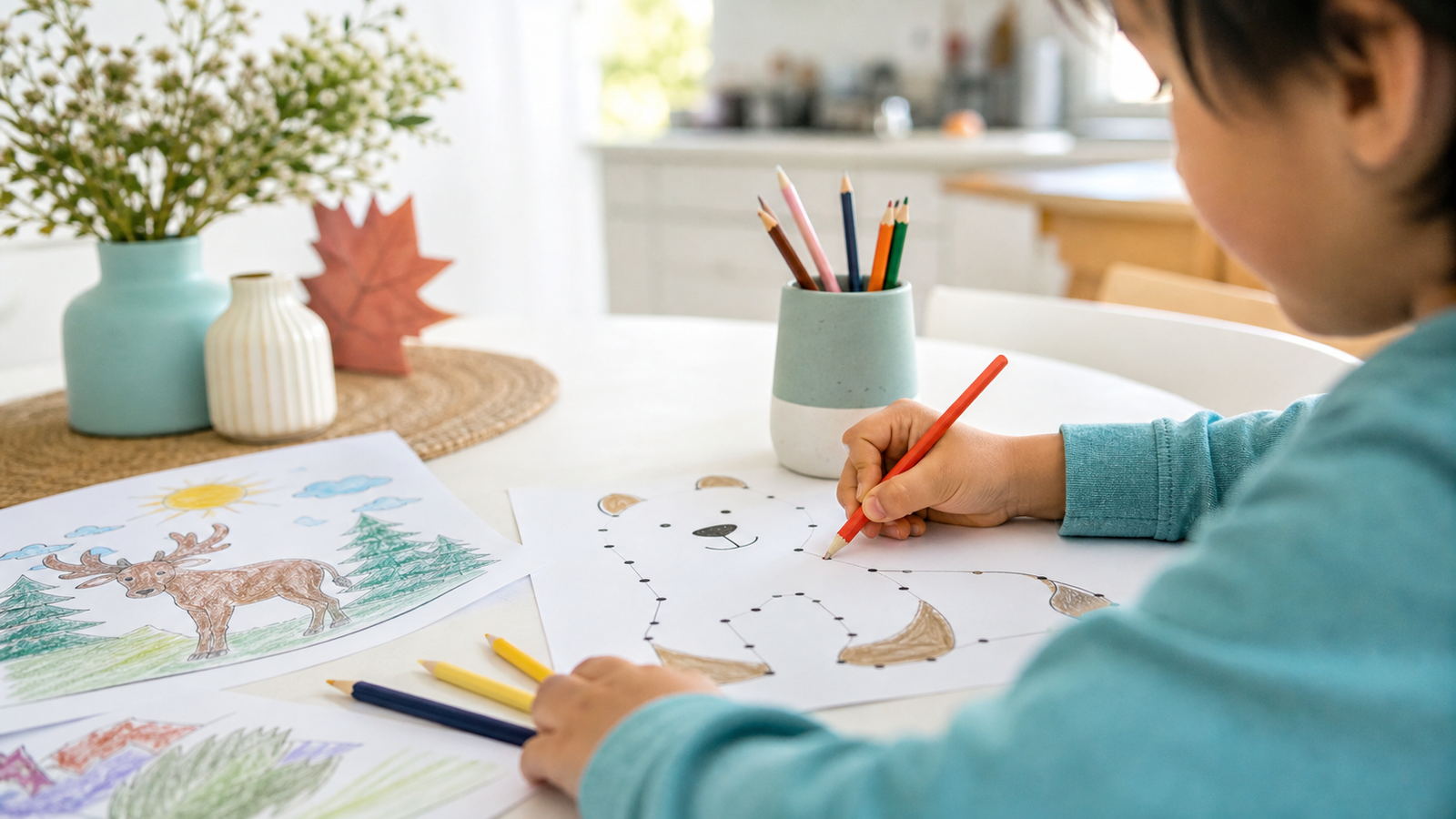
It looks like five quiet minutes with a crayon. But inside those five minutes, a child is practising much more than colouring.
When children follow dots, choose colours, grip a pencil, and finish a picture, they are building skills that support writing, early math, attention, and confidence. That is why simple learning activities for kids can be so valuable—especially when they stay playful and pressure-free.
The quick takeaway: A colouring page will not magically raise a child’s grades. But regular, enjoyable practice can support the hand-eye coordination, focus, and early number skills children use at school.
What is really happening while your child colours?
A lot! The eyes are watching the page. The brain is making choices. The fingers are adjusting pressure. The hand is trying to move in the direction the child wants.
That teamwork between the eyes and hands is called visual-motor integration. Children use it to print their names, copy shapes, cut with scissors, build with blocks, and complete classroom work.
Research with preschool-aged children has found connections between visual-motor skills, executive function, and school readiness. A recent review of 11 studies also found that fine motor skills were positively related to reading and mathematics abilities. These studies show a relationship—not a guarantee—but they help explain why hands-on practice matters.
Five small skills hiding inside one simple activity
1. A steadier pencil grip
Colouring and dot-to-dot pages invite children to guide a crayon or pencil toward a target. With time, those small movements can feel smoother and more controlled. This is useful preparation for drawing shapes and printing letters.
2. Counting that feels like a game
A connect-the-dots page gives numbers a purpose. Instead of only saying “one, two, three,” a child has to find the next number and move toward it. It is a playful way to practise number recognition and sequencing alongside kindergarten math worksheets in Canada.
3. Focus and patience
These activities have a clear beginning and end. Children practise staying with a task, checking what comes next, and recovering from a small mistake. Even a few focused minutes can be a meaningful win.
4. Creative choices
Does the elephant have to be grey? Absolutely not. Colouring gives children a safe place to make decisions, experiment, and explain their ideas. Those little choices help make the page feel like their own.
5. The confidence to say, “I did it!”
Finishing a picture provides an immediate sense of progress. A child who completes five dots today may feel ready to try ten tomorrow. Praise the effort—“You kept going!”—instead of focusing only on staying inside the lines.
What does success look like at home?
It is usually not a perfect picture. Real success might be:
- a preschooler holding a crayon for one extra minute without frustration;
- a kindergarten student finding the number that comes after 8;
- a child slowing down instead of rushing to the last dot;
- a Grade 1 learner feeling more comfortable when printing;
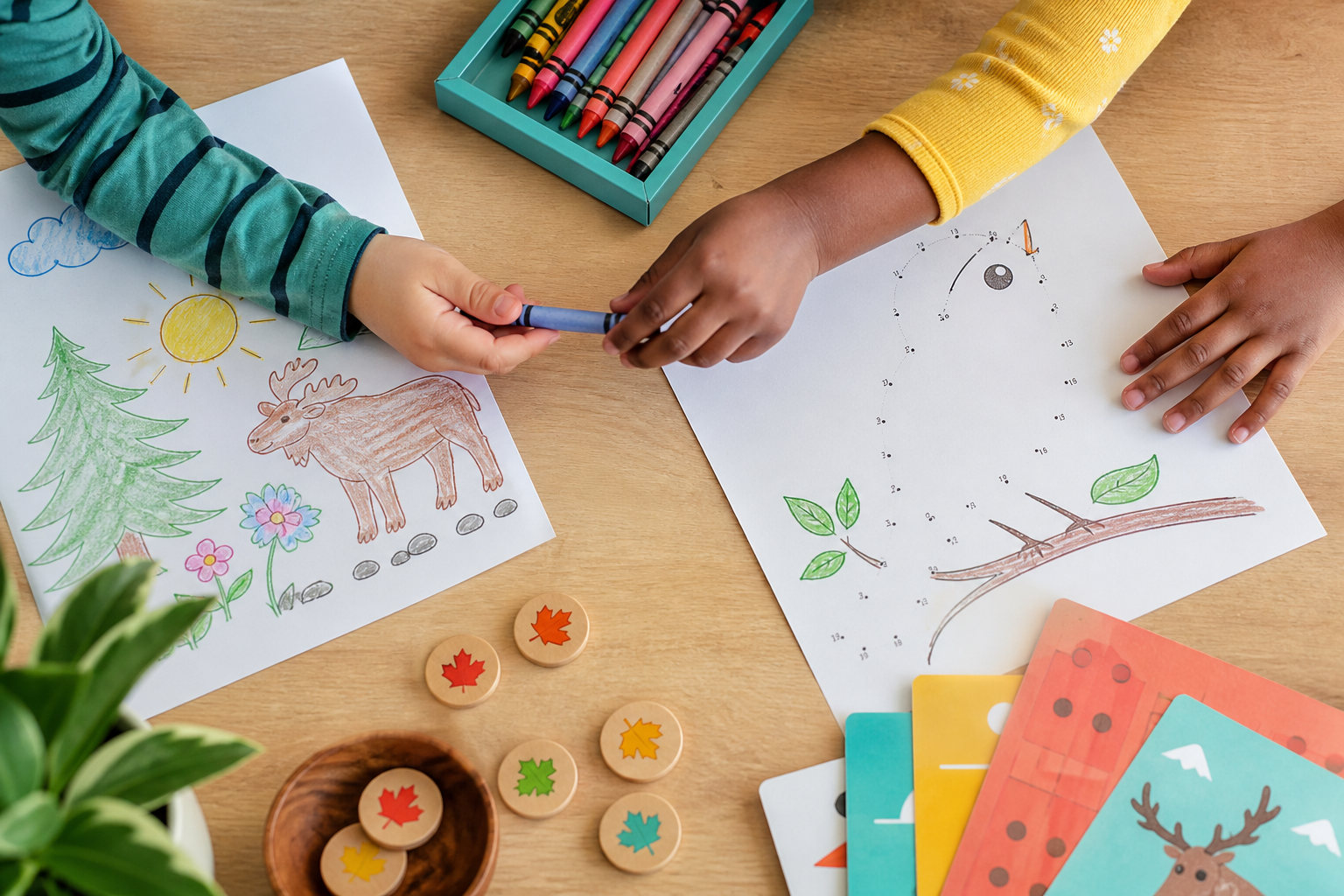
- siblings sharing colours and talking about their pictures; or
- a calmer, screen-free transition before homework or bedtime.
One small study followed children aged six to ten with ADHD symptoms during a 10-week mandala-colouring program. The colouring group showed improvements on executive-function measures, and parents described better concentration. The researchers were clear that more study is needed. Colouring is not a treatment—but the results are an encouraging example of a simple activity being used as consistent, focused practice.
Six easy ways to make activity pages more helpful
- Match the challenge to the child. Start with fewer dots, larger spaces, and thicker lines.
- Keep it short. Five to fifteen happy minutes beat a long, frustrating session.
- Talk about the page. Ask, “What comes next?” or “What do you think the picture will become?”
- Offer choices. Let children choose the page, the colours, or which part to complete first.
- Try different tools. Crayons, short chalk pieces, washable markers, and triangular pencils create different hand experiences.
- Extend the learning. Colour an animal, then read a related book, count toy animals, or visit your local library.
Choosing Canadian and Ontario learning materials
Good Canadian curriculum printable worksheets should feel familiar and age-appropriate. Look for Canadian spelling, clear instructions, uncluttered pages, and activities that connect with what children are learning.
For families using Ontario Kindergarten learning resources, printable pages work best as one piece of a bigger day that also includes conversation, books, outdoor movement, building, pretend play, and rest. Ontario’s Kindergarten guidance encourages children to learn through play, exploration, writing, painting, and drawing.
Whether you are searching for free printable worksheets for kids in Canada, Canadian homeschool resources, Grade 1 worksheets Ontario, or preschool activity sheets, quality matters more than quantity. One thoughtful page completed with an encouraging adult can be more valuable than a thick packet rushed through alone.
Small page, big opportunity
Connect-the-dots and colouring pages are affordable, accessible, and easy to use. They turn a few quiet minutes into a chance to practise coordination, counting, attention, creativity, and persistence.
Keep it light. Let the child lead. Celebrate the process. Those small moments of practice can become part of a much bigger learning journey.
Curious about the research?
For readers who would like to explore the evidence, here are the main sources behind this article:
- Fine motor skills and academic ability: systematic review and meta-analysis
- Visual-motor skills, executive function, and social behaviour in preschoolers
- Motor and mathematics skills in preschool children: systematic review
- Mandala colouring and executive function in children with ADHD symptoms
- Ontario Ministry of Education: Parent’s Guide to Literacy and Mathematics in Kindergarten
Every child develops at a different pace. Activity pages are educational resources, not diagnostic or therapeutic tools. Speak with a qualified health or education professional if you have concerns about your child’s development.
Keep the learning going
Looking for more hands-on fun? Download free printable connect-the-dots and colouring pages — Explore free worksheets — or book a free tutoring consultation.