By Lee · July 31, 2026
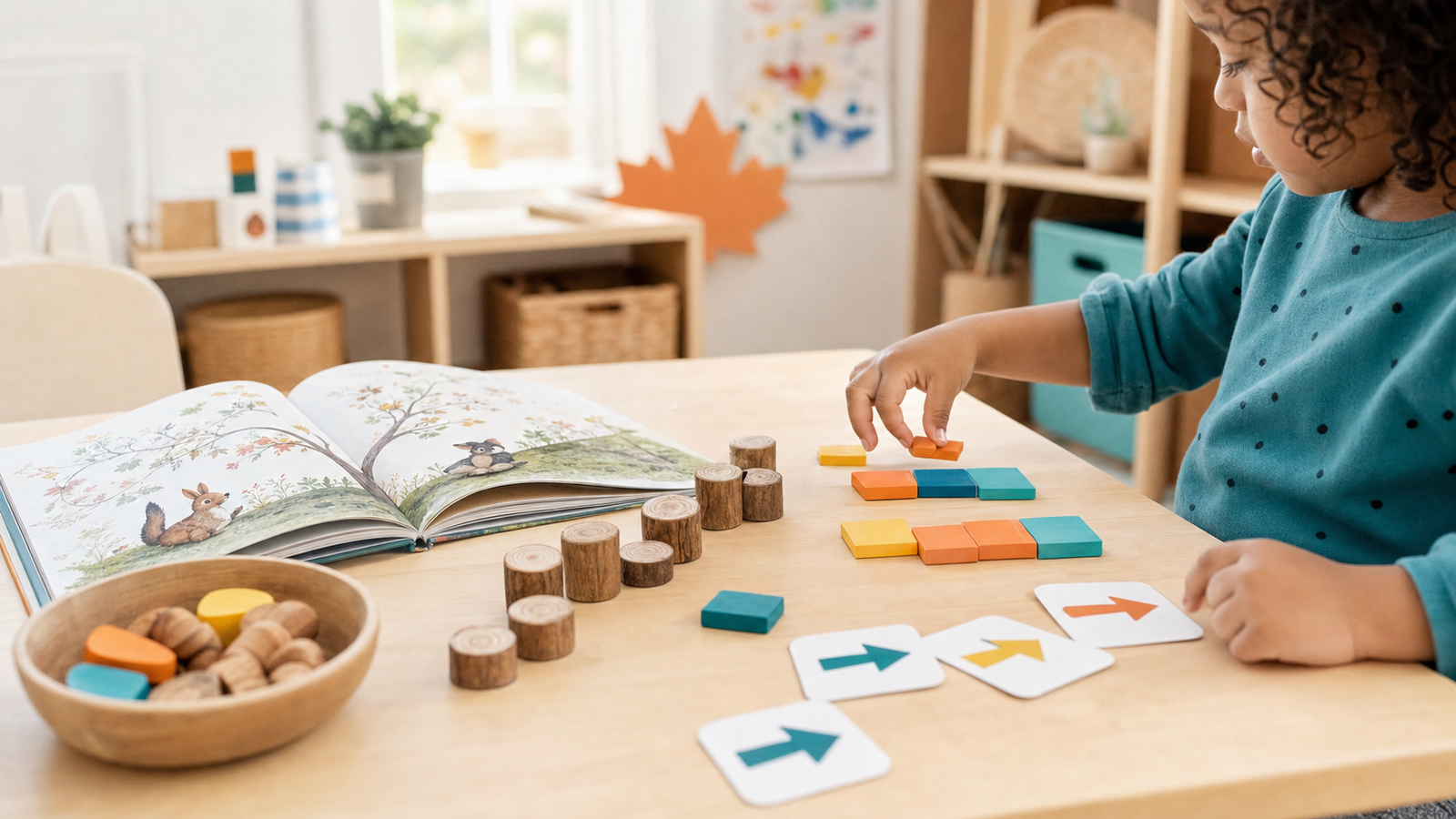
A parent-friendly Ontario guide
What Ontario Kindergarten Students Learn in 2026
Kindergarten may look like stories, songs, blocks and play—but there is plenty of real learning happening underneath all that fun. Here is a quick tour of the Ontario Kindergarten curriculum and what families can expect.
🔤 Phonics: cracking the reading code
Children begin connecting letters with sounds. They listen for rhymes, spot the first sound in a word, blend simple sounds and recognize familiar words. A five-minute letter hunt around the house can turn reading practice into a game.
💬 Vocabulary: bigger, better words
New words grow through read-alouds, conversation and pretend play. Building a block tower can introduce words such as balance, taller and steady—without feeling like a lesson.
✏️ Early writing: every mark matters
Pictures, scribbles and invented spelling are all part of becoming a writer. Children may create a grocery list, label a drawing or write a tiny story. Reversed letters and creative spelling are normal at this age.
🔢 Counting: more than saying numbers
The Kindergarten learning expectations in Ontario help children understand what numbers mean. They count real objects, match numerals to quantities, compare groups and put numbers in order. Try counting socks, toy cars or apple slices.
🟠 Patterns: what comes next?
Red-blue-red-blue may look simple, but patterns strengthen prediction and logical thinking. Children can copy, extend and invent patterns with beads, blocks, movements or sounds.
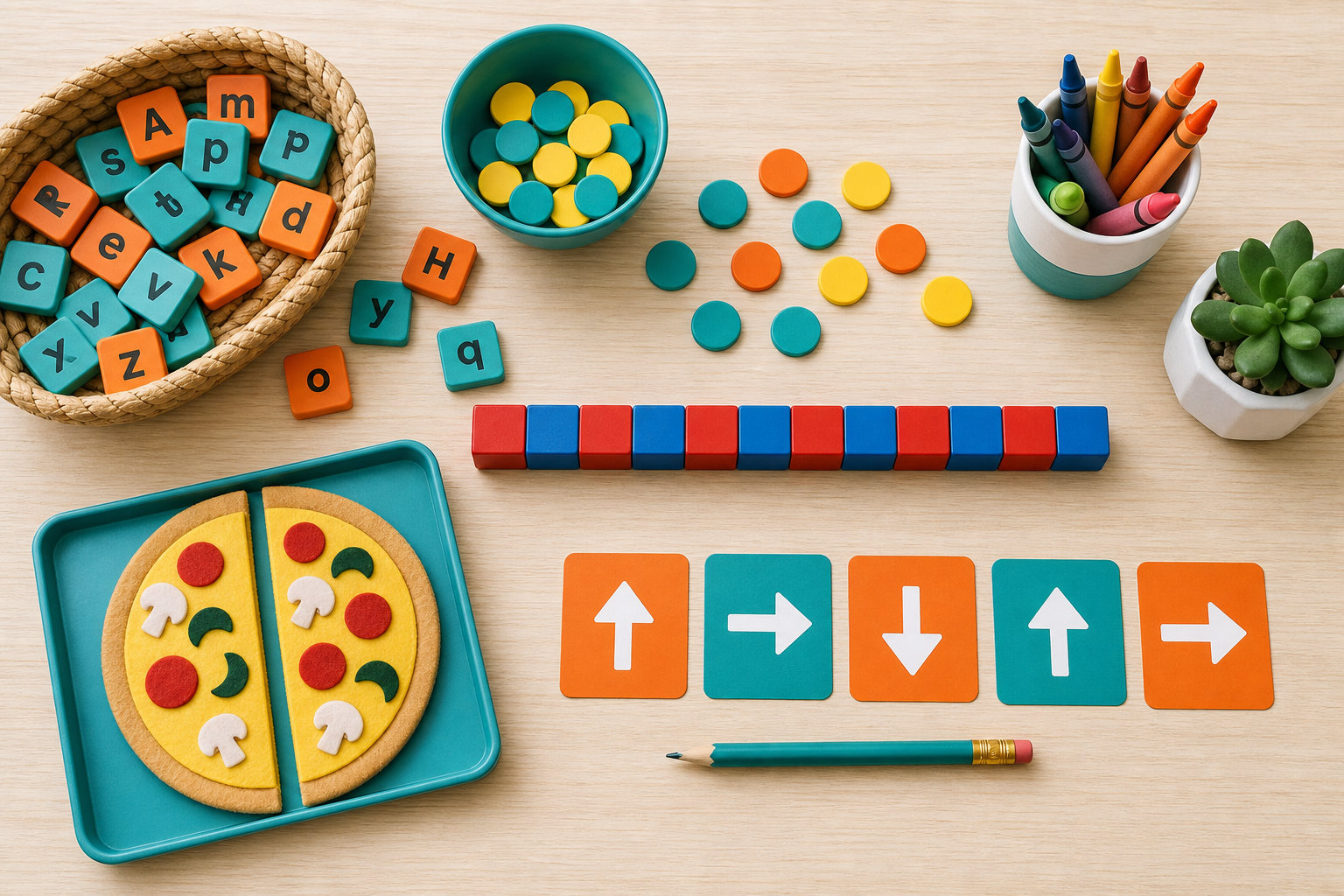
🍕 Fractions: learning through fair sharing
Fractions begin with everyday ideas such as a whole, a half and equal pieces. Sharing a sandwich or playdough pizza fairly gives those words a meaning children can see and touch.
➡️ Coding—without needing a computer
Introductory coding is really about clear instructions, order and fixing mistakes. Ask your child to guide a toy from the couch to the door: “Forward two steps, turn right, then stop.” If the toy gets lost, change the instructions. That is debugging!
🏡 Easy ways to help at home
- Read together and ask, “What do you think happens next?”
- Count objects during snack time or cleanup.
- Make patterns with colours, claps or footsteps.
- Invite your child to draw, label and explain their ideas.
- Use short, playful Ontario Kindergarten worksheets as extra practice—not as a replacement for play.
🌱 Every child grows differently
Some children love letters first; others shine in building, storytelling or number games. Progress is not a race. The best learning happens when children feel curious, capable and supported.
One story, one pattern or one counting game at a time can build confidence for school and beyond.
Ontario resources for families
PeerTeach connects Ontario families with approachable learning support and study materials designed to build confidence.
Want more?
Download free printable worksheets for your child — Explore free worksheets — or book a free tutoring consultation.